This article outlines the common price ranges and bandwidth solutions when deploying cloud servers in Japan, and analyzes why different bandwidth and network types will directly affect access delays, packet loss, and user experience. It also provides purchase and optimization suggestions for different business scenarios (display sites, file downloads, video streaming, cross-border APIs) to help decision makers find a balance between cost and performance.
What is the common rental price range, and how does it affect the choice?
Alibaba Cloud's ECS instance prices in Japan are affected by instance specifications, storage, bandwidth, and billing methods. Generally, the basic bandwidth of entry-level 1-core 1GB memory + small disk is roughly a few hundred to a thousand yuan per year on a monthly basis, and the increased bandwidth of mid-to-high configuration (2-4 cores, 4-8GB) is several thousand to tens of thousands of yuan per year. If you choose to charge by traffic or purchase public network bandwidth independently, the short-term test cost will be lower. When evaluating, you should consider how much to rent together with business concurrency, traffic peaks, and disaster recovery needs to avoid experience bottlenecks caused by saving money.
Which bandwidth level is more suitable for different types of overseas users?
Display websites and corporate official websites: usually choose a bandwidth of 5-20Mbps to meet most overseas browsing needs; file downloads and large file distribution: it is recommended to be above 50Mbps or billed by traffic and cooperate with CDN caching; video/live broadcast/audio and video interaction: priority is given to ensuring continuous bandwidth and low jitter, 100Mbps or above or multi-link redundancy is more reliable. When making judgments, estimate the overall bandwidth requirements based on the number of concurrent connections and the peak bandwidth of a single user, rather than just looking at the number of page requests.
How to choose the bandwidth billing model, and where can you save costs and ensure good experience?
Common billing models include monthly subscription based on bandwidth peak, billing based on traffic, and elastic bandwidth on demand. Short-term activities or unstable traffic are suitable for elastic expansion and contraction based on traffic or hourly; for long-term stable business, it is more cost-effective to choose monthly or annual subscription. If the target users are widely distributed, the Japanese computer room can cooperate with global CDN and acceleration services (such as Alibaba Cloud Global Accelerator) to transfer long-tail traffic to edge nodes, thereby controlling the cost of bandwidth selection while improving the overseas access experience.
Where to deploy nodes or computer rooms will affect access delay and stability?
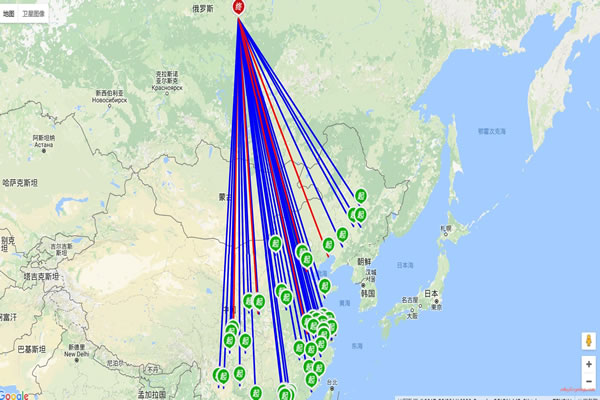
Japan’s common computer rooms are in Tokyo, Osaka and other places. Being close to the target user location will significantly reduce the one-way delay. When users from mainland China visit Japanese computer rooms, the quality of the operator's interconnection (Telecom, China Unicom, China Mobile) and international export bandwidth determines the probability of packet loss and jitter. If the target is global users, it is recommended to set up the main site in Japan and combine it with multi-region backup or multi-machine room load offloading, and select access points based on user sources to reduce the number of transoceanic hops.
Why are network factors other than bandwidth equally critical?
Bandwidth is only one dimension that determines throughput. Latency, jitter, packet loss rate and route optimization directly affect the actual experience. TCP slow start and packet loss retransmission will amplify user perception on high-latency links. Using TCP optimization, enabling HTTP/2, compressing resources, reducing the number of requests, properly configuring MTU, and enabling long connections can improve access fluency under the existing bandwidth. If necessary, cooperate with dedicated lines or BGP multi-line to avoid single link failures.
How to conduct testing and subsequent optimization during rental to ensure overseas access experience?
Latency and bandwidth peak testing (ping/traceroute, iperf, actual page loading test) should be done before renting, and real concurrent scripts should be used to simulate the peak. After going online, network indicators are continuously monitored and combined with CDN caching strategies, fragmented transmission, breakpoint resumption and current limiting protection to deal with burst traffic. For sensitive services, consider hybrid deployment: Japanese computer rooms carry core services, edge nodes bear static resources, and global acceleration or dedicated lines are used to ensure SLA when necessary.
- Latest articles
- Discussion On The Accelerated Deployment Experience Of Combining Taiwan’s Site Cluster Server With Content Distribution Network
- Technical Comparison Report Analysis Of The Advantages And Disadvantages Of Malaysian VPS Native IP And Proxy Plans
- How To Choose Vietnam Vps6. Practical Suggestions To Improve The Stability Of Overseas Nodes.
- How To Configure Malaysia Cn2 For Multi-site To Achieve Stable Cross-border Access
- Cloud Server Singapore’s Role And Collaborative Solutions In Multi-cloud Strategy
- Migration Manual South Korea CN2 Station Group How To Switch The Existing Station Group To CN2 Line Solution
- Alibaba Cloud Malaysia Server Multi-region Deployment And Cross-Border Access Optimization Solution
- Common Factors Affecting US Cn2 Line Speed And Their Optimization Methods
- Cost Optimization Plan Teaches You How To Reduce The Cost Of Native IP In Taiwan Server While Ensuring Performance
- Popular tags
-

Get An In-depth Understanding Of The Major Japanese Cloud Server Vendors
get an in-depth understanding of the major japanese cloud server vendors and provide detailed selection guides and comparisons to help users find suitable cloud services. -
Understand The Japanese Cloud Server Address And Its Network Performance Evaluation
this article will introduce the address and network performance evaluation of japanese cloud servers in detail, helping users choose the best and cheapest cloud servers. -

The Best Choice For Japanese Cloud Servers During The 618 Promotion
during the 618 promotion, it is crucial to choose the right japanese cloud server. this article recommends the best options for you to help you get the most profit in promotions.